Showing posts with label India. Show all posts

Tuesday, 20 August 2019

Andaman: Call of the Emerald Waters; The Itinerary Question

Andaman; only the name is enough to make you imagine white pristine beaches and emerald blue waters. This colouration is where these Islands gets its name "the Emerald Islands". I shall dedicate another post for my 12 day journey in these islands in details but first let me clarify a few doubts harboured by people who want to go there.

1. How many days will it take to cover the Andaman and Nicober Islands?

    First, the Nicober islands are off-limits to tourists, only the tribal people who live there and on-duty Indian Navy personnel are allowed.
   Secondly, there are more than 500 islands but only 30-35 are permanently inhabited by people (tribal or otherwise). Even out of these few only 7-8 are open for tourists. This may seem like a very small number but trust me, to cover all these islands you will need about 20 days in total.
   But thankfully you can also visit the islands with just 5 days in hand. As you can see there is no easy way to answer this question, the number of days depends on how much of the region you wish to explore.
   My suggestion is take as many days as you can afford, you will not get bored or run out of places to visit.
Coral Bridge, Laxmanpur Beach, Neil Island: One of the most iconic landmarks in Andaman

2. Travel agency or Self-Planned ?

If you are planning to go in the peak seasons (October - January end) you may face difficulties in getting accommodation after reaching the islands. It is therefore recommended that you book hotels beforehand (via travel agencies or on your own). The problem is there is no internet connection (not mobile phone internet, anyway) and hence it is not possible to book most of the hotels online in a reliable manner.
The travel agencies have sources on the island who executes these bookings on your behalf. But if you can book the rest houses managed by Andaman tourism development corporation (a government organisation) it is ensured that you will get the best views.
Arranging cars and ferry services on your own may proof troublesome as well, travel agencies do make things easier but at the cost of money and flexibility of course. if you have sufficient time and if you are trained to adapt to tricky situations, I say, go for a self planned trip. if you study enough, you will be able to see places that most tourists do not go to.
In my opinion, book hotels on your own or give preference to the agency but leave the transport to a reliable agency. Just mention your planned itinerary and let the agency do the rest.

3. Itinerary:


6 DAYS 5 NIGHTS:
With this you will be able to say to people, 'yes, I have been to the Andamans'
Day 1> Port Blair.
Day 2 > Baratang (Lime stone cave + mud volcano) - Back to Port Blair
Day 3> (Ross island, North bay island // Jolly boy-Redskin islands )+ Chiriya Tappu
Day 4> Port Blair - Neil Island - Havelock Island (night stay)
Day 5> Havelock Island - Port Blair
Day 6> Port Blair - flight back

9 DAYS 8 NIGHTS:
This itinerary allows you to explore the entire length of the Andaman islands from the South to North and back.
Day 1>  Port Blair.
Day 2 > Baratang (Lime stone cave + mud volcano) - Rangat (Night stay)
Day 3>  Rangat - Diglipur
Day 4>  Diglipur - Port Blair
Day 5>  (Ross island, North bay island // Jolly boy-Redskin islands )+ Chiriya Tappu
Day 6>  Port Blair - Havelock Island (night stay)
Day 7>  Havelock Island - Neil Island (night stay)
Day 8>  Neil Island - Port Blair
Day 9>  Port Blair - flight back

14 DAYS 13 NIGHTS:
Leave no stones un-turned.

Day 1>  Port Blair.
Day 2 > Baratang (Lime stone cave + mud volcano) - Rangat (Night stay)
Day 3>  Rangat - Diglipur
Day 4>  Diglipur - Port Blair
Day 5>  (Ross island, North bay island // Jolly boy-Redskin islands )+ Chiriya Tappu
Day 6>  Port Blair - Havelock Island (night stay)
Day 7>  Havelock island (leisure)
Day 8>  Havelock Island - Neil Island (night stay)
Day 9>  Neil Island - Port Blair
Day 10> Port Blair - Little Andaman
Day 11> Little Andaman (Leisure)
Day 12> Little Andaman - Port Blair
Day 13> Port Blair (sight seeing)
Day 14> Port Blair - flight back

Now let me give a brief description of the places that I have mentioned in the itinerary.

1. Port Blair: 
This is the capital city of the Andaman and Nicober Islands. It has a very large port and the only airport. Port Blair is situated in the Southern part of the islands. Among many others, the following are the places of interest.
NOTE: Most tourist attractions remain closed on Monday.
Cellular Jail

  • Cellular Jail: The infamous Cellular Jail where the most daring freedom fighters were sent by the British Colonisers. The jail itself was built by the inmates, between 1896 and 1906; and the brick walls are the only witness to the inhuman torture the prisoners were subjected to. A wonderful 30 minute light and sound show is played each evening both in English and Hindi. Generally, the first show is in Hindi (5.30 onward) and the later one is in English. Though as far as I know these timings differ widely. The jail museum is open on all days except national holidays from 09:00 am to 12:30 pm and 1.30 pm to 4.45 pm.
  • Chatham Saw Mill: Established in 1883 it is one of the oldest in the world.
  • Sagarika Emporium, Anthropological Museum, Samudrika Marine Museum, etc. etc.
2. Baratang:

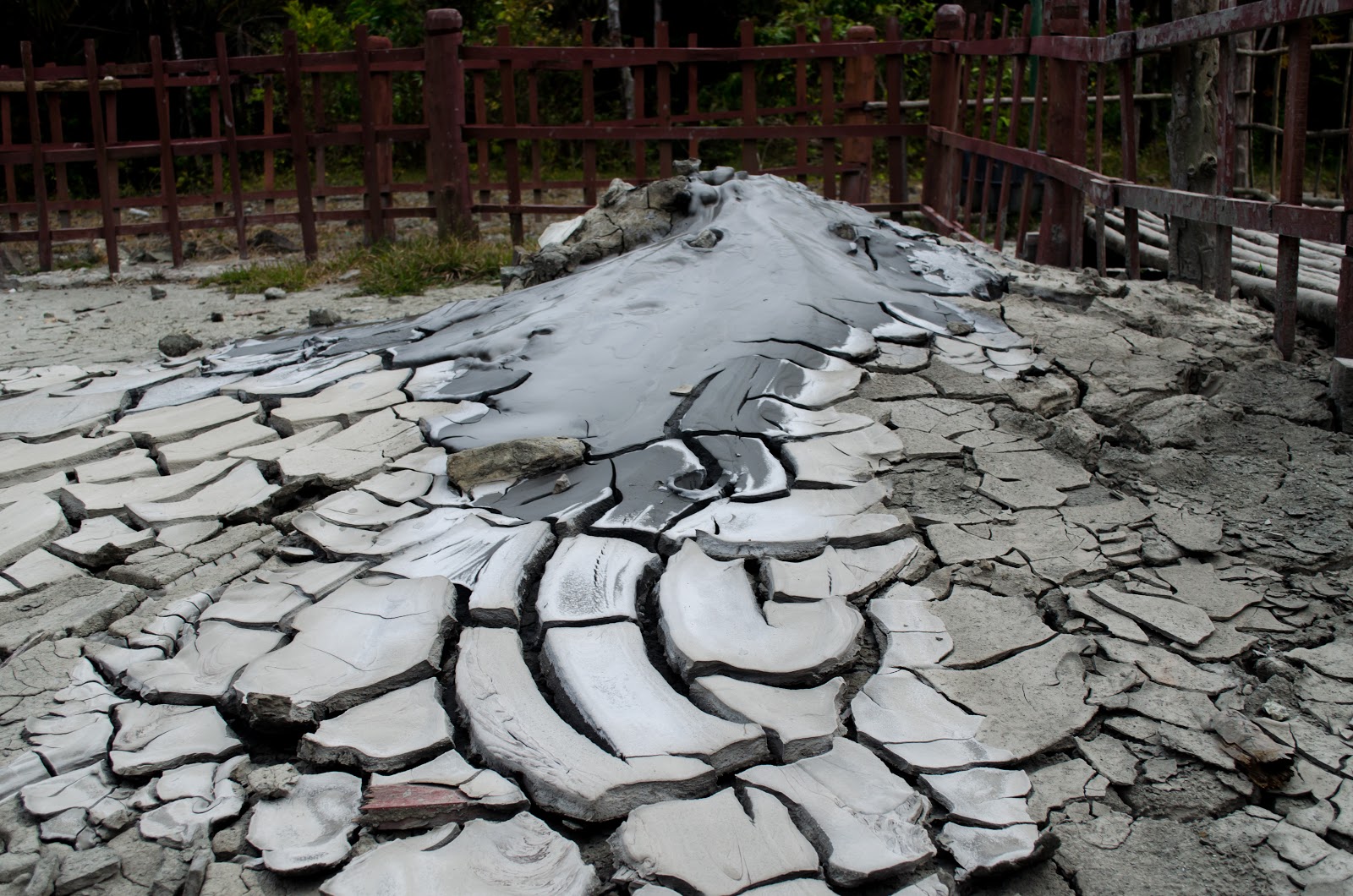
Baratang island is about 100km from Port Blair. The road to this island goes through dense forests populated by the Jarwa Tribespeople. The island boasts the only limestone cave in these parts and the only mud volcano in India.
Limestone cave, Baratang

Mud volcano, Baratang

3. Rangat/ Middle Andaman:
Spending a night at Rangat, a small town in Middle Andaman is a good idea because it lets you enjoy gorgeous sunrises on the beaches like Amkunj, Morice Dera. On your way to North Andaman, you can also enjoy a walk through dense mangroves at Dhanninallah Mangrove Creek. And the lush forest can be enjoyed much better during day-time.
Amkunj Beach, Middle Andaman


4. Mayabunder:
Mayabunder is a scenic port in Middle Andaman.
5. Diglipur/North Andaman:
Diglipur is the main town of North Andaman. You would find pristine beaches like the Kalipur Beach, known as a breeding ground for sea-turtles. Twin islands Ross & Smith, connected by a sand bridge is a sight to remember.
Kalipur Beach, Diglipur, North Andaman

6. Havelock Island:
This island is probably most popular after Port Blair. Famous for great white beaches and emerald blue waters, Havelock is a magnet for tourists all over the world. Radhanagar beach is by far the most popular. Elephant beach is known for water activities like scuba diving, snorkeling and other joy rides. One of the most beautiful beaches, which will give Radhanagar a run for its money is the Kalapathar beach.
Kalapathar Beach, Havelock Island

7. Neil Island:
A small neighbour of Havelock, this island is by no means any less attractive. Sitapur beach offers probably the best sunrise in all of Andaman. Lakshmanpur beach houses the iconic coral arch. Bharatpur beach is adjacent to the jetty and a popular destination for glass-bottom boat ride and swimming.
Sunrise from Sitapur Beach, Neil Island

8. Ross Island:
An island where you can see the remnants of the lavish life British Army officers. The island is full of destroyed structures like a church, some houses and most of them are reclaimed by nature. It is definitely a must-see place.
There are other islands to explore if you want to explore the islands even more (as you should) add the following
1. Parrot Island
2. Long Island
3. Visit  Ross Island, North bay island & Jolly boy-Redskin islands in two days
4. Hike to Mount Harriet
Deer in Ross island

Nature reclaimed structure: Ross Island

9. Little Andaman:
All of the tourism agencies will tell you "There is NOTHING to see or do in Little Andaman" and they are dead wrong.
It is a paradise island far (80 nautical miles away) from the "madding crowd". If you want to live a few days in peace, have some privacy in the lap of nature then this is the place to visit.
Only government-run ships go from Port-Blair to Little Andaman and that too not daily. So you have to plan ahead and keep a day or two as a buffer. The tickets are very cheap and the journey takes about 6 to 8 hours depending on the weather condition and speed of the ship.
This island has the only waterfall in the entire Andamans. The pristine beaches are a treat for eyes and the perfect blue water is amazingly relaxing.
This was just a brief introduction to the wonder that is the Emerald islands. Do not fall for the statements like 'there is not much to see', '5 days are enough'. Decide on your own, ask yourself what you want out of this vacation.
Leave comments on how you liked my post. For more information, stay tuned or ask me questions.

Monday, 15 April 2019

Key Monastery, the Spiritual El Dorado of the Himalaya

If you have read my Hampta Pass blog you will know that unlike most people we did not conclude our trek at Chhatru and ride back to Manali but instead, we ventured further into the cold desert named Spiti Valley.

Key Monastery
Here is a map to visualize the route.


Stranded at Chhatru:

On 1st July, we reached Chhatru at about noon after finishing the last day of our Hampta Pass trek. Just as we reached the camp we were made privy to a really bad news. Due to incessant rain for the last few days, the only motorable road to Manali via Rohtang Pass was cut off and the cars which were supposed to take us to Chandratal had not arrived. This setback poured cold-water on hundreds of people's plans as they were all stranded at Chhatru without any cell network. The only land-line was available after a 1 km hike to a private farm owned by some retired colonel.

Chhatru


After standing in line for nearly an hour we managed to call our travel agent and he assured that a car will come the next day as planned and pick us up. Unfortunately, we had to spend the day at Chhatru instead of seeing the fabled Chandrataal (the moon-lake).
After almost a week we were lucky enough to see a brilliant starlit sky together with a dazzling moonlit landscape. The sight was surreal and my photographs, taken with a mere kit lens; let alone my words can do justice to it.

After a good night's rest, we went out for a stroll and realised the situation was far worse than we thought. The queue of stranded cars now extended for more than a kilometer and at least a thousand people are now stranded. The situation was made much worse because of lack of communication. People were panicking and out of nowhere came this rumour that we are going to be stranded for at-least 3 days more. This rumour spread like wildfire and sent people into a frenzy, some started buying large quantities of biscuits and other dry food, some suddenly decided to cross the Hampta Pass on foot, it was utter pandemonium.

Sole Telephone booth near Chhatru
In order to try and establish contact with our travel agent again, I and my brother went to the phone-booth and found a much longer queue than the last day. After 1.5 hours I thought I heard someone calling my name in a distorted way "Protu Das !! Protu Das !!". Turning back I saw a small fellow with obvious Mongolian features and asked him who he was. He told me that he was the driver who would take us to Kaza. We came to know that the Rohtang Pass had just been opened and he himself came from Manali. Elated, we headed back to the camp and without much delay packed up our things and started our journey shortly after noon.


A Different World


Just after a few minutes, we realised what a visual treat we were in for. My team-mates had previously criticised me for planning such a trip where the journey was more time demanding than the stays. Now they realised that the landscapes of Spiti Valley are of unmatched beauty and the contrast to the lush green hills we are so used to see was very stark.

The hills were of no particular colour, every hill had its own hue, its own texture and strong wind eroded away the softer sedimentary rocks for millions of years and created spectacular gravity-defying abstract sculptures.

The path is barely motorable, it is full of small boulders and sometimes we had to roll up the windows to prevent dust from getting in. After one and a half hour, we reached Batal. It is about 31 km from Chhatru and from here the road to Chandrataal splits off from the (so-called) Highway. Batal it is only 15km from the beautiful Chandrataal. We sighed collectively as we went past the road leading to Chandrataal. That road was also closed due to heavy landslides and even if it were open we could not afford a night there. For now, it remains in our bucket-list.
Losar and eroded mountains in the background

 At about 3.30 pm we reached Losar, a small village on the way to Kaza. It is about 65 km from Chhatu and 5 hours of continuous roller coaster of a car ride caused a severe hunger attack. We entered a small roadside restaurant and ate like we survived an apocalypse.
Rejuvenated by toast, omelette, noodles and cups of coffee once again we hit the dusty road. Every turn looked more beautiful than the last and we would often irritate the driver by asking him to stop frequently. Seeing that the daylight is fading fast we refrained from these unscheduled photo ops and at about 7.30 pm we reached the Kaza bus Stand. The office of the agency (Spiti Valley Tour: 9418537689) had already been closed and hence we boarded a nearby homestay owned by a local elderly woman. The strict business-woman refused to budge from her price even when we called her 'Didi' affectionately, tough bird !
After a sumptuous dinner, we surrendered our tired bodies and dreamy minds to the fluffy (but heavy) blankets. the oxygen depleted air did not let us sleep peacefully though.

  KEY MONASTERY


After a really heavy breakfast, which raised a few eyebrows in a small sweet-shop we reserved a car which took us to the Key Monastery. The Key Village is about 15-16 km from Kaza and the majestic key monastery looks over the village. A single glance at the magnificent structure is enough to instill a sense of mystery and awe into the hearts of the beholders. At the base of the monastery, there is a small cafe cum hotel with well-decorated rooms but we marched on towards the upper reaches of the Gompa.

The office was on the same floor as the main worshiping hall. I hesitatingly approached an elderly Lama and asked him whether we are allowed to stay inside the monastery. With a polite smile, he pointed upwards and said: "talk to the guy upstairs."
As we climbed up the entire valley opened up to us and the 'guy' explained that only a dormitory is available and the toilets were outside the dorm in the corridor. At that point we could not care less, the dorm had a ROOF. The roof probably had one of the best views imaginable and we stood there, spellbound. We could see the Key Village, the green pastures and the Spiti river meandering through the valley like a great serpent. The sky was unbelievably blue and the slight cold breeze made everything PERFECT.
Just look at the pictures, my feeble attempts to describe the scenery by using just words will be blasphemous.


After freshening up, we went for a stroll to soak in the view from every viewpoint. We were happy as larks, we could not believe our luck; we were staying at the place made of fairy tales and that too for only 250/- per person including food and lodging. We had missed our lunch by half an hour because the monks follow a strict routine, which the guests also must abide by.

In the evening we were served milk tea and barley or some other brown millet flour. seeing that we were expecting something more he explained that we should pour the tea into the bowl of flour and mix them and then eat the mixture. With 2 spoonfuls of sugar, it tasted quite good. But frankly, it was not enough to satiate our hunger, so we smuggled in veg  pakora into the monastery (not sure if it was against the rules or not, Lord Buddha forgive us). Sitting on chairs and spare mattresses on the roof, chatting over hot cups of tea and pakoras, breathing in the cold mountain air, enjoying the scenic beauty as the sun began its journey behind the rocky peaks; I asked myself: "Can life get any better ?"
The depleted levels of Oxygen in the air took a toll on one of our team-mates.  After a simple dinner, we turned in for the night.
The next morning we scrapped our plan to trek 6.6 km uphill to Kibber, arguably the highest altitude village in India. We were served a heavy breakfast of a lentil soup and a type of oily bread. As we entered the sanctum sanctorum of the monastery to pray for our safe return something beautiful caught our eyes. The little monks were sitting in queues waiting for their share of the breakfast and almost everyone was beaming ear to ear. Life and happiness is probably not as complicated as we think. We make it complicated by introducing desire, competition and ego, here amidst the towering mountains, those seems quite irrelevant.


With a strange sense of contentment we boarded the sole bus to Kaza. The next day we would retrace our path through Losar, Kunjum Pass, Chhatru and reach Manali. Only this time we would go through Rohtang pass by bus unlike how we came, crossing the Hampta Pass on foot.


Even after all these months as I am writing this down, just the memories of that place is enough to give me goosebumps allover.


Monday, 2 April 2018

Hampta Pass : Gateway from Kullu to Spiti

The most baffling thing about the Hampta Pass trek, which sets it apart from the plethora of treks in the Himalayas is neither its remote location nor the challenges it offers but the absolutely contrasting vistas presented by the lush green Kullu valley and the rugged and dry Spiti valley. The high mountain pass acts as a gateway to an entirely different world, very few treks offer this dramatic transition. I shall now delve into the details of this trek objectively, before telling my own experience.


Location: 

The popular approach is from Hampta dam which is located at a distance of about 12km from Manali in Himachal Pradesh. From there the trek starts and after crossing the pass ends at Chhatru /Chatru, a small village on the Gramfu-Batal-Kaza road. The trek can also be done the other way round.

For your reference here is a map for the entire trek route assuming you will return via the Rohtang Pass to Manali.

Season: 

Try avoiding the monsoon at all costs. October - early November is definitely the best season. The roadway remains closed due to heavy snow accumulation till mid-August. 
A note of caution: The travel agencies will tell you anything to keep their business running all year long, but do not make the mistake of taking any trek lightly irrespective of the tags like 'easy', 'moderate'. Depending upon factors like weather, River level which are beyond human control,  a so-called easy hike in the Himalayas may seem to be an insurmountable obstacle.


Monday, 13 March 2017

Pindari Diaries

The entire Northern part of the Indian Subcontinent forms a giant biosphere. This eco-system, one of the most diverse in the whole world, owes the abundance of life to several great rivers flowing thorough this region. And all of these rivers starts from the high glaciers of the Himalayas, the largest and tallest of all mountains. It comes as no surprise that billions of people of these regions humble themselves at the feet of these mountains and rivers. We literally owe our lives to the Great mountains and mighty rivers that flow from them. For centuries these pristine glaciers have attracted adventurers and pilgrims alike.
I along with my friends followed the Pindar river to the fabled Pindari glacier (3660 mtrs) and the journey has been a fabulous experience for us.

Warning Signs; An Appeal:

The glaciers melt throughout the year and form the rivers and every winter it rebuilds itself from rain and snow. But due to global warming, the average temperature is rising every year and the glaciers are melting away at a much faster rate than it can build itself. This glacial recession is happening right now, and it is happening more rapidly than the glaciologists have anticipated. When I visited Pindari glacier and compared the current state with the photographs my mother took, about 30 years ago, I was shocked to see how much of the glacier had eroded away.

I urge the readers to do their part to make sure these glaciers survive, otherwise the entire ecosystem will be devastated within this century.
1. Do not litter the trek routes, carry back every bit of plastic you bring with you.
2. Do not cut tree branches unnecessarily . Do not pick flowers or plants.

" Take nothing but photographs, leave nothing but footprints"  

Pindari Glacier

Season:  April -May; September - October

Tuesday, 21 February 2017

Chilling Out in Style at Jilling

We all want to escape from our daily pre-programmed life every once in a while. Genetically human beings are wanderers and instinctively we crave something new, something different. For most people a small vacation is enough to rejuvenate their soul. If you love mountains, wilderness, isolation, tranquility then I suggest you spend a few days at Jilling, where you can have it all.


The Jilling Estate is essentially a privately owned forest in Kumaon region of the Himalayas. The entire 120 acres of land is devoid of any human settlement apart from a few well decorated cottages, which are built in secluded locations. For many of us it is not possible to camp in the wilderness and experience nature's dangerous beauty firsthand. Jilling home-stays are designed to give you exactly the feeling of being one with nature without compromising luxury and comfort.

When I read about Jilling and the Lall family in a travel magazine, I was intrigued and without wasting any time contacted Nandini Lall. She is the daughter of Steve Lall,  the landlord of Jilling Estate. As on 2017 the rates are 3000/- per day per person including dining and guided tours of the estate.

Sunday, 19 February 2017

Phoktey Dara ; A Peep in the Lord's Bedroom

Kanchenjungha comes from two Sanskrit words, Kanchan which is another name for the Hindu God of creation and destruction, Lord Shiva and Jangha meaning thigh. The entire Kanchenjungha or Kanchendzongha range looks like Lord shiva is sleeping and the main peak forming his raised thigh. No wonder when Buddhism spread and took hold in this part of the land Kanchendzongha became the sleeping Buddha. The more popular theory is that Kanchendzonga comes from 5 Tibetan words 'gangs' (snow), ' chen' (great), 'zgod' (treasure) and 'nga' (five).   In any case towering 8586 metres above sea level, the 3rd highest peak of the world is one of the most beautiful snow covered massif in the Himalayas. The sheer size of the mountain , precipitous peaks dwarfing everything​ around it, brings a sense of awe to the beholder.


Kanchendzongha/Kanchenjungha


Phoktey Dara is a hilltop situated near the intersection of three borders, Sikkim, West Bengal and Nepal, and it offers spectacular views of not only the Kanchenjungha range but also several Chinese peaks and Giants of Nepal, Mt. Everest, Lhotse, Nuputse and Dhaulagiri. But to behold this heavenly site a good bit of hard work and sweat is required.


How to get There :


Phoktey Dara is a total 3 day trek from the village of Uttarey in West Sikkim. One can reach Uttarey in a single day from New Jalpaiguri Railway station or Bagdogra Airport.
You can  opt to reserve your own transport if you have a 6-10 person group or budget is not a constraint for you. Otherwise shared jeeps are available but you have to break several times.

Phoktey Dara


Wednesday, 15 February 2017

Satkosia ; A Hidden Gem on The Bank of Mahanadi

The diversity of flora and fauna that we Indians are blessed with is facing devastation. Pollution, poaching, deforestation, urbanisation, large-scale hydro-electric projects all of these factors and more are catalysing this cataclysmic phenomenon. The most alarming part is the lack of awareness of our people and our utter ignorance. Tourism can help raise awareness if done in a eco-friendly manner. When in the wilderness we must tune ourselves in such a way that we do not leave any lasting impact on that place. A wilderness explorer must be a silent observer.
Satkosia Tiger Reserve boasts a diverse gorge eco-system with deciduous plants. It is situated at the bank of river Mahanadi, the largest river in the state of Orissa. A great place for wildlife enthusiasts to spend a few days in.

Tikarpara Nature Camp


BOOKING:

Booking and entry permit is done officially through the website of Orissa eco-tourism.
https://www.ecotourodisha.com/index.php
 Please check the current rates from the site. At the time of our booking it was around 2500-4000 Rs. for 2 persons (Including food and lodging) depending on the location. But the online transaction takes a whopping 10% of the total amount as transaction fees. Another thing to note is that the payment portal DOES NOT accept RUPAY cards ( even though that is not mentioned in the website).
Alternatively you can try your luck by spot booking , that would spare you the transaction charges, but I would not advise that. You can stay at one place for maximum of 2 days at a stretch.

Here are a few contact numbers:
DFO Office Satkosia: +918763102681
Shamim Chauhan (Site Manager Satkosia) : +8658023333


Sunday, 6 November 2016

Visakhapatnam and Araku Valley; A refreshing short trip

Visakhapatnam or Vizag is a bustling city on the coast of the Bay of Bengal. Despite being the most populous city in Andhra Pradesh it is surprisingly clean and a popular tourist spot. This particular tour is almost mandatory for Bengalis and they like to throw in theBora caves and the beautiful Araku valley in the mix. The entire tour can be done in only 5 days. So I am just gliding over the facts of this tour, the history and mythological essence can be studied at your own leisure.


 ITINERARY: 
Day 1: Reach Visakhapatnam. (Preferably in the early morning). Visit to some of the places of interest.
Day 2: Catch the train to Araku Valley. Visit Bora caves. Night stay at Araku.
Day 3: Journey back to Visakhapatnam.
Day 4: Realax. Catch a train back.

Obviously you can extend the program by 2-3 days by staying an extra day at Araku and Visakhapatnam.

Thursday, 5 February 2015

Santragachi ; A lake full of life (weekend tour 2)


Santragachi is a nice weekend destination close to Kolkata , specially in winter. If you are planning to spend the weekend in bustling shopping malls and admiring splendid landmarks of Kolkata, I recommend that you throw Santragachi into the mix. You don't have to be an avid birdwatcher to relish the beauty of this place.


Lets get down into the details.........


Disclaimer: I neither have the expertise nor the equipment needed to take good photographs of birds from long distances. So don't let my mediocre (at best) photographs kill your interest.


The Santragachi Jheel (Lake) is 13,75,000 sq ft in size and attracts thousands of migratory birds each winter and bird watcher from all over West Bengal flock together as well.


Common Moorhen (Adult)


HOW TO REACH?

1. Reach Howrah Railway Station (Its one of the busiest railway stations in India with most train handling capability..not that hard to find )
2. Board local trains in South-Eastern Railway section.
3. Get down at Santragachi station.

Bronze-winged Jacana


WHY SANTRAGACHI?


1. Its pretty close to the city of Kolkata (Calcutta).
2. Many species of birds are found here, in a relatively small area.
3. Easy to reach.
5. Many nature clubs organize awareness camps for general public where one can meet expert ornithologists.


Lesser_whistling_Duck


WHEN TO VISIT?

Preferably winter when migratory birds flock together. But birding enthusiasts visit throughout the year as different birds come here at different seasons.
I would suggest late January- February.

Northern Pintail


BIRDS FOUND:

  1.  Lesser Whistling
  2. Northern Pintail
  3.  bronze-winged jacana
  4. Cormorants
  5. Egrets
  6. Purple Heron 
  7. Moorhen
  8. Common Coot
Several other species are found here. 

Cormorant


AN APPEAL :


Over the years the number of birds coming to these lakes have fallen drastically all over India and Santragachi is no different. Recently many houses are being built beside the lake and some of the locals do not feel any duty towards preserving the lake eco-system.
So, please do not throw any garbage in or near the lake and try to persuade others not to do the same. A little step taken by you may make a big difference and help preserving the lake.


White-throated Kingfisher

 
Please feel free to ask anything or correct me if I am wrong anywhere.
 

Wednesday, 4 June 2014

Har Ki Dun : The Valley of Lord Shiva & Marinda Tal


 Introduction: 

  Har Ki Dun/Doon (HKD) is a cradle shaped valley surrounded by breath-taking snowpeaks situated in the Gahrwal Himalayas of Uttarakhand. Its an ideal trek for beginners and has many aspects that the veterans will appreciate as well. The valley is overlooked by the Bandarpunch range to the South and the Swargarohini to the North . Har Ki Dun means The Valley of Har or Lord Shiva of the Hindu religion. The valley is situated at and altitude of approximately 3566 mtrs.
Bandarpunch range overlooking Jamdar Glacier & Har Ki Dun Valley

Reasons why it is an ideal trek for beginners:  

  1. The altitude is below the threshold of altitude sickness.
  2. The route has sufficient places to stay , so no need to take tents and other equipments.
  3. The trekking route consists of river banks , jungles,green meadows (Bugyals), picturesque villages, wheat fields and what not.In most seasons there is snow as well. So a novice trekker gets the necessary experience to tackle every terrain in one go.
  4. There are many agencies operating in this zone which makes it easier for the beginners to organize themselves.
  5. The view is amazing.
  6. After reaching HKD one can go further to Marinda Tal or Jamdar Glacier.
Sankri


Season:

  • Want a lot of snow ? March-April. (accommodation not available)
  • Want snow and greenery and blue sky ? April-May
  • June-July is rainy season so its better to avoid them.
  • September-October is probably the best time because there will a lot of flora and fauna, but chances of finding snow is slim.
  • HKD offers winter trekking as well but on November-December-January there may be a lot of snow. The accommodation at HKD remains closed so tent is a must.


Banderpunch Peak From Har-Ki-Dun


Itinerary:

Day 1: Dehradun to Sankri/Taluka
Day 2: Sankri/Taluka to Seema (14 Km trek) [easy gradient]
Day 3: Seema to Har Ki Dun (12Km trek) [moderate to steep gradient]
Day 4: HKD to Marinda Tal and Back (3.5+3.5 = 7Km) or alternatively HKD to Jamdar Glacier    (7.5+7.5 = 15 Km).
Day 5: HKD to Taluka/Osla/Gangad.
Day 6: Taluka to Sankri.
Day 7: Sankri to Dehradun.


Cons:

Well there aren't many, but here goes...
  1. HKD has become a hot-spot for trekkers. Many large agencies bring people in large numbers without any regard for the environment. These people do not have the ability or intention of carrying their own luggage so the agencies bring huge number of mules and they ruin the entire route with their dung. Luckily for us we encountered the problem in the very last day but even that was annoying.
  2. Unlike other trekking routes that I have been to, people here are a bit reluctant to provide hot water for drinking and washing.
  3. Large agencies tend to hog all the resources available along the way including rest houses and sometimes food.

Do you Need A GUIDE ?

  • We did this trek without a guide/porter but certainly not without guidance. From Taluka to Seema most of the path leads through a forest but the path is well marked. There are a few diversions but sticking to wider path and looking out for mule hoof marks and candy wraps helps a lot. The route all the way to HKD is fairly obvious so there is little chance of getting lost if one uses presence of mind.
  • If you are a BEGINNER and do not have an EXPERIENCED MEMBER with you its imperative that you take a guide.
  • The guides can explain you the other routes and the peaks too, a good guide can give you first hand information about the place.
  • The locals will readily help you if you get into a fix.
  • The cost of a guide / porter as of 2014 is around 500-600 Rs / day.


https://www.youtube.com/watch?v=vOuNKswMjpo
Watch the slideshow of the Beautiful Har Ki Dun valley.


DAY 1:   (Dehradun to Taluka)


After a long journey to Dehradun on the following day we boarded a bus bound for Sankri. At Naitwar, we stopped to get our permits to enter Govind Wildlife Sanctuary. Sankri is the last point in this route, with bus and cell-phone connectivity. Another scenic drive along the river Tons or Tomosa took us to Taluka. Most trekkers spend the night at Sankri and make the journey to Taluka in the morning and so naturally we were the only tourists in the entire village. After our dinner we looked up at the sky and stood there spellbound by the glitter of billions of sparkling stars. We even spotted a satellite which passed over our heads and disappeared behind the dark silhouette of a hill. The chilly mountain-breeze broke our trance and we settled in for the night.


Way to HKD


DAY 2: Taluka to Seema (14 Km trek) [easy gradient]


In the next morning we confidently started our 14 km trek to Seema, without any guide or porter. The first few kilometres along river Supin were truly refreshing; the golden rays of the sun penetrated the pine canopy every now and then as if playing peek-a-boo and exotic birds created a sweet melody.


The uphill climb through the forest was gruelling and my rucksack felt twice as heavy as it did in the first few hours. We were resting frequently as the climb became steeper. In the early afternoon we reached the beautiful village of Gangad, from there Seema is another 4 km uphill. It took us six hours to reach Seema from Taluka. Seema is just a halting point for trekkers and climbers, consisting of Rest Houses of Gahrwal Mandal Vikash Nigam and the Forest Department and two-three canteens cum makeshift shelters.


Unlike Taluka the night sky was covered with clouds. At night we slept like logs in the GMVN dormitory, unaware of the rampage Mother Nature was causing outside.


Seema


DAY 3:  Seema to Har Ki Dun (12Km trek) [moderate to steep gradient]


The rain let up in the morning and we started our 12 km journey to Har-Ki-Dun, the valley of “Har” or Shiva. The sky was blue and we could see the glistening snow peaks at a distance. After the initial climb the path bifurcates, the left one leading to Osla village and the right one towards Har-Ki-Dun, following a tributary of Tomosa. The narrow path led us through lush green fields, pine forests, wide grasslands and offered pleasing vistas of snow-white mountains throughout. We were very tired, every step took extra effort but we kept on going. Just when I thought I could go no more, I spotted a rock on which someone had scribbled “Welcome To Har-Ki-Dun.”


After taking those last few steps, we stood there, overwhelmed by the sheer grandeur of the place. Our aching limbs and the gripping cold forced our attention to the more immediate issue of finding a shelter. There were a few tents erected by trekkers and at a distance we could see the FRH and GMVN bungalow situated over a ridge, directly overlooking the valley. We were allotted a small hexagonal wooden hut maintained by the forest department. After an early dinner we went to bed.


Har Ki Dun (GMVN Bungalow)


 DAY 4: HKD to Marinda Tal and Back (3.5+3.5 = 7Km)


The next morning we had a good look at the magnificent panorama of Har-Ki-Dun. To the south the towering Swargarohini massif provides a majestic backdrop to the green valley. The river Har-Ki-Dun-Gad flows through the “U”-shaped valley from Jamdar glacier like a silver ribbon. At a distance we could also see the precipitous Banderpunch range. Swargarohini means “Pathway to Heaven”, legend has it that the Pandavas from the epic Mahabharata attempted to climb it to reach Heaven.


After breakfast we headed north, for Marinda Tal. It is a fine 3.5 km trek over grassy meadows ornamented with colourful wild-flowers and soft snow.
Marinda Tal


Marinda Tal is not a lake per se, a giant rock partially blocked the path of Marinda Gad, thus forming a wide water-body with little current. To the south one could see the Swargarohini and towards the north the Borasu pass continued through snow-covered cliffs on both sides, all the way to Sangla Valley in Himachal Pradesh. After spending an hour in this snowy fairyland, with a heavy heart we started our return journey.


Borasu Pass


The breath-taking views, the eerie silence of Har-Ki-Dun generates a sense of mystery and tranquillity. It is indeed a land of legends and a valley befitting God.

Portugal in a Week: From North to South [Part 2: Day 1]; PORTO

 Porto is situated at the banks of the meandering Douro river in the north-west of Portugal. It is one of the most picturesque cities in all...